Oct. 16, 2026
Share
Skillet vs. frying pan, at first glance, skillets and frying pans may look similar, but different designs and materials bring different advantages to the kitchen. Whether you need heat retention, easy handling, or a richly browned crust, choosing the right pan matters. Both are versatile, but their performance depends on their construction and the cooking task.
The terms “skillet” and “frying pan” are often used interchangeably. Some brands use “skillet” for deeper, heavier pans and “frying pan” for shallower designs, but these distinctions are not universal.
A skillet is a wide, flat-bottomed pan with sloped or flared sides and a handle. Deeper models provide room for stirring ingredients and cooking dishes with some liquid. Unlike a skillet, a sauté pan typically has taller, straight sides, making it more suitable for simmering sauces and braising.
Cast iron skillets are durable and retain heat well. They take time to heat up, but once hot, they help maintain the temperature needed to develop a flavorful crust on meat. This makes them a good choice for searing steaks and shallow-frying.
A cast iron skillet with an appropriate oven rating can also handle cornbread with golden, crisp edges and one-pan meals that start on the stovetop and finish in the oven. Models with matching lids are useful for braising: browning food first, then gently cooking it with liquid until tender.
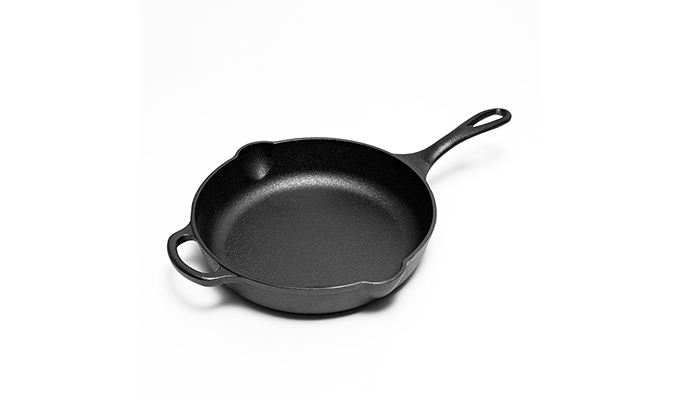
A frying pan is a shallow, flat-bottomed pan, usually with a long handle and outward-sloping sides. Its open shape makes it easy to slide a spatula beneath food, turn eggs, and flip pancakes.
Frying pans are available in cast iron, stainless steel, carbon steel, and aluminum. Thinner, lighter models generally heat up faster and are easier to lift or toss, while cast iron frying pans offer the same heat-retention advantages as cast iron skillets.
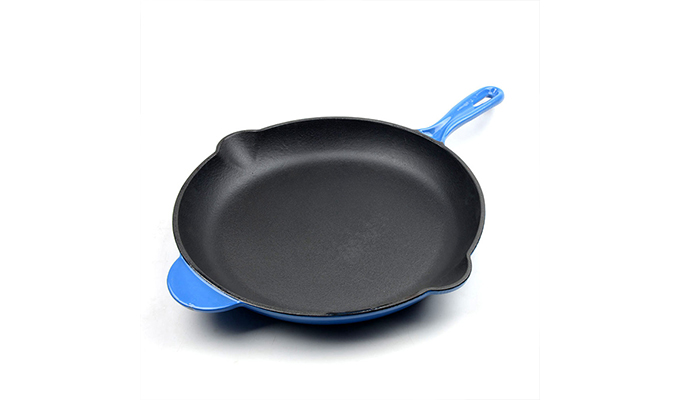
Cast iron surface options include vegetable-oil pre-seasoning and enamel in different colors. Pre-seasoning creates a seasoning layer that helps reduce sticking; it is different from a conventional nonstick coating. Enameled cast iron does not require seasoning. Handling comfort depends on the pan’s weight and handle design, especially when cooking with one hand.
The following comparison reflects common product descriptions. Actual specifications matter more than the name.
| Feature | Skillet | Frying Pan |
|---|---|---|
| Shape | Flat bottom and sloped sides; some models are deeper | Flat bottom and flared sides; often shallow |
| Materials | Often associated with cast iron; other metals are available | Cast iron, stainless steel, carbon steel, or aluminum |
| Heat retention | Strong in heavy cast iron models | Depends on material; cast iron versions also retain heat well |
| Handling | Heavy models are less convenient for frequent tossing | Lighter models are easier to lift and maneuver |
| Typical uses | Searing, shallow-frying, and oven cooking; braising with suitable depth and a lid | Eggs, pancakes, fish, vegetables, and everyday pan-frying |
| Oven use | Depends on the pan, handle, finish, and temperature rating | Depends on the same factors |
| Surface options | Seasoned, enameled, uncoated, or nonstick-coated, depending on material | Similar options, depending on material |
Consider the dishes you cook most often. Taller, straight sides help contain ingredients and liquids during stirring, shallow-frying, and braising. At the same rim diameter, a straight-sided design can also provide a larger flat cooking surface for meat.
Sloped sides improve access and flexibility. Their gentle angle lets a spatula slide beneath food more easily, making them useful for turning eggs, flipping fish, and tossing vegetables.
Side shape alone does not determine even heating or moisture retention. Material, base thickness, cooking temperature, and lid use also matter.
Deeper pans help contain splashes and provide more room for larger ingredients and sauces. KUFU deep skillet designs offer space for cooking chicken breasts and stirring sauces with less risk of spills.
Shallow pans offer easy access to food and encourage moisture to escape, helping with browning and crisping. KUFU cast iron shallow designs suit dishes such as crisp potato pancakes and golden fish fillets.
Choose greater depth for dishes with more liquid, and a shallow design for accessible flipping and browning. For oven cooking, always check the manufacturer’s temperature limit.
A: Cast iron is an excellent choice for heat retention, searing, and durability. The best material depends on your cooking needs and preferred weight.
A: The names often describe the same cookware. Some skillets are deeper or heavier, while some frying pans are shallower and lighter. Compare the material, depth, weight, surface treatment, and oven rating.
A: Uncoated cast iron can transfer iron into food, but the amount varies with the food and cooking conditions. It should not be relied on to prevent or treat iron deficiency.